“. . . religious immaturity is the most pernicious and dishonourable variety of all.”
– Immanuel Kant, “What is Enlightenment?”
INTRODUCTION
Last spring the Pew Research Center released a list of what traits or experiences Americans most want in a presidential candidate. It was no surprise that the most sought after traits involved tenure as a governor, military service, or having attended a prestigious university. What was the least desired trait? You might think having smoked marijuana or an extramarital affair would be it, but you would be wrong. The worst trait a presidential candidate can have is being an atheist (Lipka). This is shocking to find in a nation whose First Amendment preserves freedom of religion, and arguably freedom from religion in the case of the secular, some may say. Since atheism is the denial of religion, does it not have freedom? Is atheism protected under the freedom of religion? Regardless of atheism’s statutory status, it is evident that many Americans treat ‘atheist’ as a pejorative term, and this in the land of the free and the home of the brave. Atheists are often brave because they risk much in a highly religious society admitting to their doubts. It is an interesting experience becoming the village apostate. Take a priest who has lost the faith: He is courageous when he tells his congregation that he no longer believes in God and risks losing his respect in society. As an atheist and a philosopher, I believe it is important to understand some of the reasoning behind the distaste with which atheists are often treated. One recurring criticism from theists is that without the divine there is no basis for morality, no more purpose or meaning in life.
I do not agree.
As far back as we can know, religion has been an important part of human society, whether in the form of a local shaman, basic geomancy, the pastor in the local church, or a rabbi, imam, or monk. Part of their importance in society has been to provide a grounding for morality. How else, one might ask, could morality be objective if not supported by the divine? The secularist rejects a divine foundation for morality, only to have this question asked again and again, and when a secularist cannot surreptitiously provide a satisfactory response the theist assumes to have somehow defeated the atheist. To think such would be an error.
I aim to reject this fallacy. It is perfectly possible to live a moral life without religion, without the divine. I think a sufficiently objective moral theory is possible without the divine, and further it is always the case that morality has been founded not in the divine but in the rational.
First, I will briefly discuss what normative morality means to moral philosophers. Then I will show one of the more common theistic arguments of today, divine command theory, and review two philosophers’ interpretations of it. Thereafter, I will review responses to this argument given by Bertrand Russell (1872-1970) and Jean-Paul Sartre (1905-1980), as well as the arguments of the New Atheists. I will then critique New Atheism and formulate my own moral theory – though not a complete system as of yet – in response to what I see as the failings of both the theistic and atheistic moralities. To do so, I will define reason and rationality (I will not draw a distinction between the two) as extending one’s experience to others by the use of valid logic. Then I will end with an explanation and defense of my two moral principles: the temporal aspect and the rational principle.
MORAL PHILOSOPHY: BACKGROUND

Morality is a complicated notion that throughout history has been closely intertwined with Abrahamic and Greco-Roman religions in the West (Hare 1). The way we speak about morality is often muddled as a result. In order to understand how morality can exist without the divine we must first learn the commonplace linguistic distinction between two definitions of morality. The Stanford Encyclopedia of Philosophy says that morality can be used
- descriptively to refer to some codes of conduct put forward by a society or,
- some other group, such as a religion, or
- accepted by an individual for her own behavior or
- normatively to refer to a code of conduct that, given specified conditions, would be put forward by all rational persons. (Gert 1)
Descriptive morality “refers to the most important code of conduct put forward by a society and accepted by members of that society” (Gert 1). For example, anthropologists often talk about the morality of certain specific societies, and when they speak about morality this way it is descriptive of said society. Therefore, this way of speaking about morality is descriptive. Normative morality – the kind we are after in this paper – refers to rules that everyone in such and such a situation should adhere to as a rational agent. For example, Kant’s categorical imperative operates normatively because he claims it is always wrong to lie (“On a Supposed Right to Lie” 64). Kant’s theory works normatively because it is an assertion that all rational persons in any situation ought to not lie, regardless of the consequences. We might not agree with him, but his theory is normative. However, we can also speak about Kant’s morality and juxtapose his philosophy with other persons, societies, and religions, etc. When I say, “Kant thought morality was categorical,” I am speaking about morality in a descriptive manner, i.e. I am speaking about morality of such and such a person or society.
All moral theories can be discussed descriptively or normatively; this is a point about language. The arguments of moral philosophy tend to belong to the normative, though, because it is in the normative sense that we assert what rational agents ought to do given a specific situation. For example, there is a popular thought experiment where a trolley cart is speeding along the tracks and cannot stop. It is heading toward and will kill three workers on the tracks ahead. You stand near a lever that can change the trolley cart to another track, thus saving these three workers’ lives. However, there is one person on this alternative track who will die. Should you pull the lever? This is a discussion about normative morality because we have specified a situation and the next step is to present reasons for why we either should or should not pull the lever, and why all other rational agents should decide the same as us. The trolley cart example demonstrates that when we discuss morality normatively it requires serious thought and argumentation in order to persuade others that they should, as rational persons, choose to pull or not to pull the lever.
If we get tangled up in a discussion of descriptive morality then we may only speak of what some society or person thinks the moral decision is with the trolley cart, but we want to make a normative moral claim about everyone. Discussing Kant or another thinker may be important to answering the question, but we must be aware that, in the end, we must make a normative claim about what all rational agents ought to do. The goal of this essay is to argue not over a descriptive but rather a normative morality. The question of this essay is now better understood: Can a normative morality exist without a basis in the divine?
DIVINE COMMAND THEORY
Divine command theory is not a new idea. In fact, one could say it is one of the very first ideas of morality. Take, for example, the stories of the Old Testament of the Bible: Typically there is someone who can speak with God and is instructed to complete a task. God says to do something (say, eradicate the Canaanites or Jebusites) and it is absolutely moral because morality is by definition that which is commanded by God. Divine command theory contends: Morality is what God commands or wills. What this means is that if God says to be kind to your neighbor, to not commit adultery, then that morality is objective because God says so. In this theory, normativity is derived from God’s command or will, i.e. all rational agents out to obey God’s command.
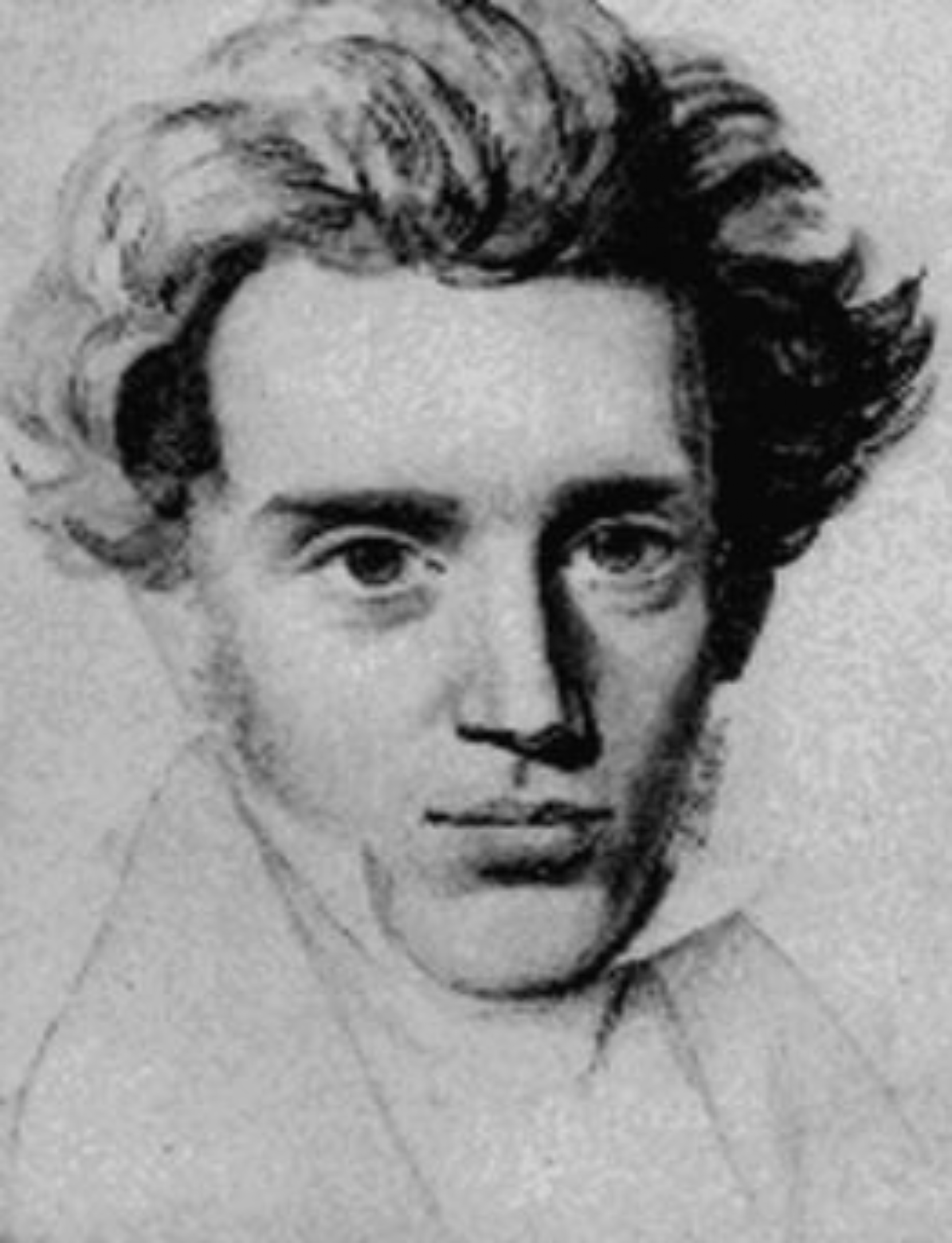
Søren Kierkegaard (1813-1855) is the first divine command theorist we will investigate. In Fear and Trembling, Kierkegaard praises Abraham as the greatest of all men and in doing so advocates for a very strong version of divine command theory. However, in order to understand why he believes Abraham the best and wisest of all men we need to briefly understand Kierkegaard’s broader system of ethics.
Kierkegaard has three spheres of existence: the aesthetic, ethical, and religious. The aesthetic sphere is a mode of being-in-the-world in which “the good life can be defined without reference to good and evil, right and wrong” (Westphal 547). This leads to a lack of higher purpose, of a pursuit of pleasure in place of what Kierkegaard considers true meaning. The ethical sphere introduces order to the aesthetic and removes the primacy of pleasure instead for the primacy of the ethical. For Kierkegaard, the ethical also lacks ultimate meaning because one becomes trapped in earthly concerns of justice. The third and final stage is the religious, in which one transcends the ethical by a leap of faith that requires an “absolute faith in God” (Westphal 547). The religious is the greatest mode of being-in-the-world for Kierkegaard because it is a sort of radical freedom from the banalities of existence found in the prior spheres. In the aesthetic sphere one is simply fighting boredom, in the ethical one is simply fighting injustice; in the religious, one can transcend the banality of the other spheres for meaning found by belief in God.
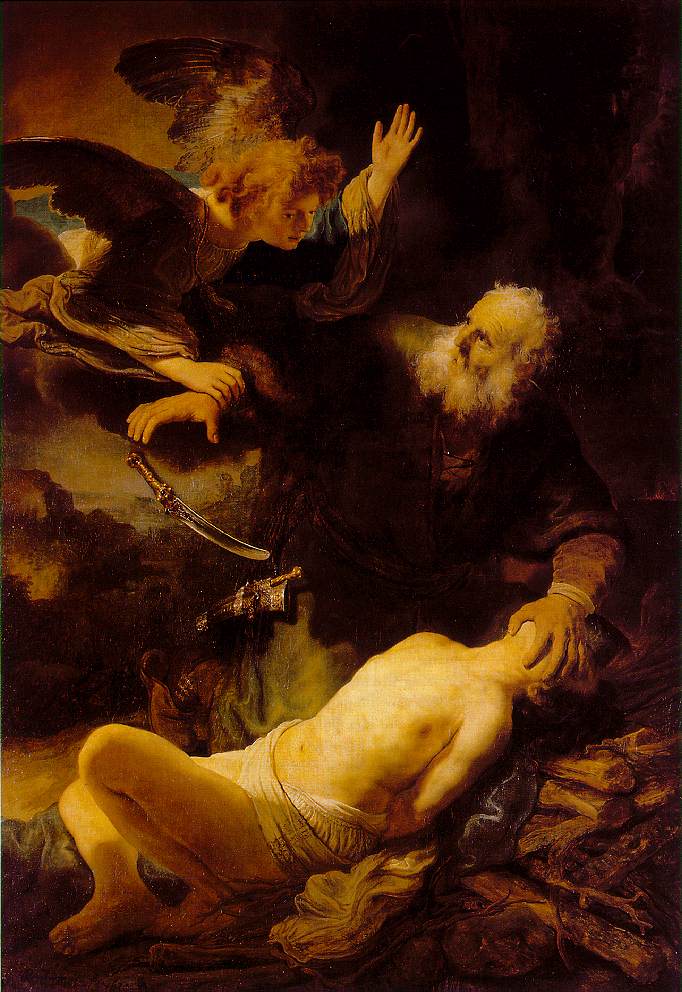
Kierkegaard’s famous account of the religious sphere of being-in-the-world is found in his thoughtful retelling of the story of Abraham and Isaac: God tells Abraham to go sacrifice his son, Isaac, and right before he does the deed an angel stops him; he has proven his devotion and faith to God. Kierkegaard writes that when God tempted Abraham to take his only son to Moriah and to sacrifice him, “Abraham believed and did not doubt, he believed the preposterous” (Kierkegaard 26). He writes also that
. . . [Abraham] did not doubt, he did not look anxiously to the right or left, he did not challenge heaven with his prayers. He knew that it was God the Almighty who was trying him, he knew that it was the hardest sacrifice that could be required of him; but he knew also that no sacrifice was too hard when God required it – and he drew the knife. (Kierkegaard 28)
Here we see that for Kierkegaard, Abraham is the beacon of the religious life precisely because he believed when no one else would believe, that he held to his faith and did not falter: He is the greatest because he exemplifies the leap of faith and utter devotion to God. Kierkegaard finds in Abraham the best example of devotion to God’s command. It is a duty to obey God even when God’s demands seem unethical, and Abraham understood this, Kierkegaard thinks. Therefore, Kierkegaard seems to endorse a strong version of divine command theory where an action’s morality is derived from God’s having commanded it. Even symbolically in the story of Abraham, devotion to God is the only thing that truly gives Abraham’s life meaning. Without God, Isaac would never have been born; Isaac is God’s gift to Abraham, the promise of a grand legacy. And, as Kierkegaard himself says, in those Biblical days many men “believed that with his son he lost everything that was dearest to him in the world” (Kierkegaard 28). Since God is the only reason why Abraham could have a son, his willingness to sacrifice Isaac at God’s request demonstrates the ultimate devotion, a devotion even more puissant than any other persons’. This is why Kierkegaard finds Abraham to be the best of all men, because he would sacrifice his son, who is dearer to him than his own life, because of his incalculable faith in God.[1]

Kierkegaard is one of the first existentialist thinkers and is often associated with contemporary European philosophy. However, divine command theory has a strong presence in the Anglo-American tradition as well. John Hare writes, “One recent development in analytic ethical theory has been a revival of divine command theory” (Hare 25). One such person is the philosopher and theologian William Lane Craig (1949-). In his central work, Reasonable Faith: Christian Truth and Apologetics, Craig argues that morality and meaning are impossible for an atheist to truly have because of a two-story model of existence he attributes to Francis Schaeffer (1912-1984):
In the lower story is the finite world without God; here life is absurd, as we have seen. In the upper story are meaning, value, and purpose. Now modern man lives in the lower story because he believes there is no God. But he cannot live happily in such an absurd world; therefore, he continually makes leaps of faith into the upper story to affirm meaning, value and purpose, even though he has no right to, since he does not believe in God. Modern man is totally inconsistent when he makes this leap because these values cannot exist without God, and man in his lower story does not have God. (Craig 65)
It would seem to Craig that he has caught the atheist in a trap from which there is not escape. All values, including morality, exist in a separate realm from us, and every time atheists invoke morality and purpose they are – according to Craig and Schaeffer – living inconsistently. Implicit in this model is the belief that God is the source of morality and that it is impossible to believe that one can truly be moral without belief in God.
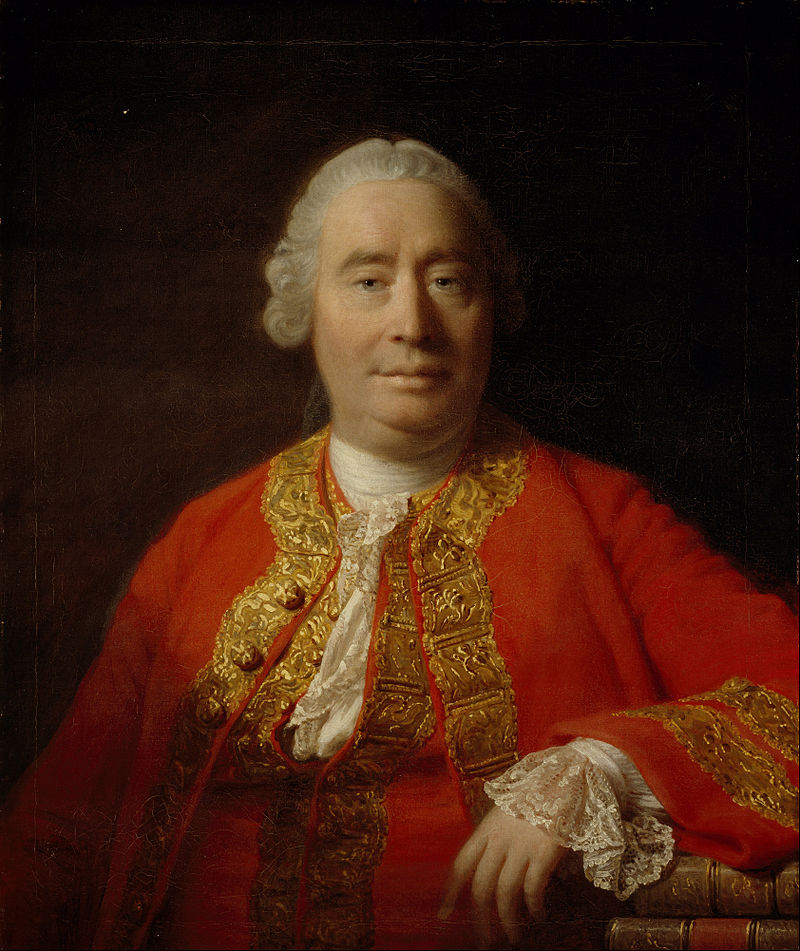
There are a few obvious responses to his claims here from the atheist point of view, such as that the two-story model is incorrect because the atheist can have meaningful conversations about morality, purpose, and meaning without belief in God. For example, I can say that rape is an immoral act without saying God said so. I can assert that all persons should treat other persons with the respect that they deserve, and as such one cannot have sex with one who does not provide consent. There are no appeals to divine authority in this argument, yet it is a normative claim about morality. Another retort could be that perhaps the two-story model is correct but God is not part of the higher realm; perhaps morality and values exist in a Platonic realm without the need of appeals to the divine, i.e. maybe there is an intelligible realm secular in nature that requires reason to access rather than faith. It may also be possible that this two-story model is simply false, that there is only one world, the one we toil in every day of our lives. There is certainly no empirical evidence that there is another realm of existence. As David Hume (1711-1776) once said, a “wise man . . . proportions his belief to the evidence” (Hume 108). Hume means that one should believe assertions only when there is enough evidence to believe. In the case of a second plane of existence, the evidence must be very strong in order to believe. However, there is a suspicious lack of evidence for a claim as grand as Schaeffer’s.
But Craig is convinced by the argument and denies that the atheists can have meaning. He argues that without God “then both man and the universe are inevitably doomed to death. Man, like all biological organisms, must die. With no hope of immortality, man’s life leads only to the grave” (Craig 57). He is saying that since if we believe God does not exist there is no afterlife, then life ceases to have meaning. Assumed in this argument is the fact that meaning is commensurate with eternal existence because nonexistence even far in the future implies nonexistence eternally. If there is no afterlife then why should I be moral, and why should I pursue a purposeful existence during my temporary existence on earth? Craig thinks that you cannot; therefore, God is necessary, he must exist. Otherwise we are just waiting to die.[2]
Craig further says that the logical inconsistency of the secular humanist is demonstrated by Bertrand Russell and Jean-Paul Sartre, respectively.[3] Of Russell, Craig says: “Bertrand Russell, too, was inconsistent. For though he was an atheist, he was an outspoken social critic, denouncing war and restriction on sexual freedom. Russell admitted that he could not live as though ethical values were simply a matter of personal taste…” (Craig 66). Craig’s point seems to be that, if we accept Schaeffer’s two-story argument, then Russell is accessing the very world of the divine that he denies as an atheist. This inconsistency shows that the atheists deny God to their own peril; they are unwilling to accept the consequences of God’s “death,” as Nietzsche put it.
Craig thinks that Sartre is also inconsistent. Craig argues that “Sartre’s program is actually an exercise in self-delusion. For the universe does not really acquire meaning just because I give it one. This is easy to see: for suppose I give the universe one meaning, and you give it another. Who is right?” (Craig 65). Craig thinks that Sartre is wrong because if God does not provide an objective morality, then we each can claim whatever morality we want. This leads to a purely subjective world plagued by the fallacious belief in a causa sui – the belief that one can generate or create one’s own purpose. The fact for Craig is simply this: if God is the root of meaning, and he is dead, then we cannot self-create meaning; this is to fool ourselves and nothing more.
In Kierkegaard we see a version of divine command theory that is driven by a focus on one’s devotion to the will of God. What God wills is by definition moral for Kierkegaard, and Abraham is his hero precisely because he exemplifies this religiously deontological morality. Craig is more focused on the error he believes the atheists make when they try to access the realm of values and meaning and morals. This is a fallacy for him because morality belongs to the transcendent realm, God’s realm. If you do not believe in God, then it is logically inconsistent to access those values; it is a leap of faith in all but name that entails every time God’s existence.
RUSSELL AND SARTRE
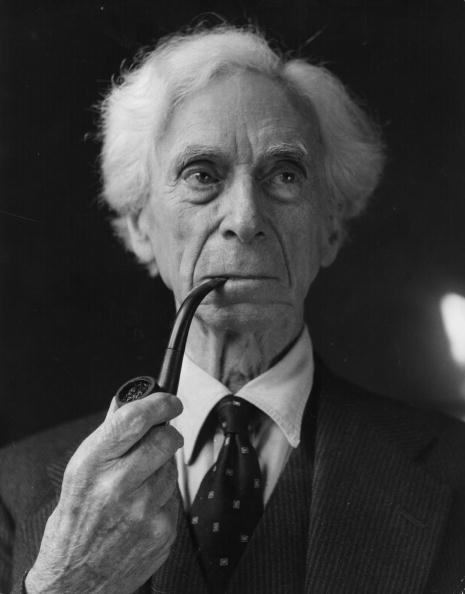
Now we will investigate what Russell and Sartre would likely say in response to Craig’s criticisms. Craig’s arguments are emotionally persuasive, yet Russell and Sartre are not defeated so easily. Russell has his own criticism of divine command theory in his essay “Why I Am Not a Christian.” Russell writes:
. . . if you are quite sure there is a difference between right and wrong, you are then in this situation: Is that difference due to God’s fiat or is it not? If it is due to God’s fiat, then for God himself there is not difference between right and wrong, and it is no longer a significant statement to say that God is good. If you are going to say, as theologians do, that God is good, you must then say that right and wrong have some meaning which is independent of God’s fiat, because God’s fiats are good and not bad independently of the mere fact that he made them. (“Why I Am Not a Christian” 12)
Here we see Russell dispute the assumption in Craig’s argument, and in Schaeffer’s two-story metaphysics, that God’s command is morality, and thus the atheists cannot have morality without belief in God. We see that Craig’s argument is valid but certainly not sound because it uses divine command theory as one of its premises. Russell shows that divine command theory does not work because either (a) God can command whatever he wants, and therefore morality is completely arbitrary, or (b) God identifies what is already moral, in which case morality is external to God.

For philosophers, Russell’s argument is often referred to as the Euthyphro Dilemma after Plato’s dialogue, Euthyphro, wherein Socrates asks Euthyphro to “[c]onsider this: Is the pious being loved by the gods because it is pious, or is it pious because it is being loved by the gods?” (Plato 11). What Socrates is pointing out is that either being pious is independent of the gods or is just what the gods love. Russell argues that theists have not provided a convincing argument to escape from this dilemma. If the theist says that God identifies or shows morality – as (b) allows – then morality exists independent of God. On the other hand, if morality is what God commands, then morality is no longer objective; it becomes subjective to his divine will. Therefore, Russell contends that divine command theory is incorrect. Once we concede this, Russell thinks religion has lost its innate moral authority, much like the monarchies of Europe lost their divine legitimacy during the Enlightenment. When it was revealed to the people that there was no such thing as a divine right to rule, that God did not actually appoint the kings and queens of Europe, then the people realized perhaps monarchies are not the best form of governance. This is what gave rise to the French Revolution and the eventual beheading of King Louis XVI in 1792, which led to a power-vacuum in government filled by various forms of democracy, communism, and fascism in the centuries to follow.
Russell’s point places Schaeffer’s two-story metaphysics in jeopardy because morality must be external to God in order to be objective in the above dilemma. If morality is external to God, morality is not divine in the sense that the divine command theorist argues; rather, morality is something intelligible and part of our world. If this is the case, there is no inconsistency when the atheist is moral.
However, Russell finds religious morality – divinely commanded or not – to be the wrong place to locate morality in the first place. He thinks that religion is based upon fear: “[F]ear of the mysterious, fear of defeat, fear of death” (“Why I Am Not a Christian” 22). Russell thinks that religion pretends to provide the answer to perhaps humanity’s greatest fear: death. For example, in Christianity one must accept Jesus into one’s life and in doing so ensures one’s place in heaven and immortality. Religion gives a fallacious answer to our fear of death. By doing this, religion and belief in God do not allow for humanity to mature, like if you were to tell your child that the family dog is off at a farm when it is really dead. It may be okay to allay the child’s fear, but at one point the child becomes an adult and must be able to deal with the reality that all things eventually die. Fear and cowardice are not the future Russell desires for humankind. He asserts that we must “[c]onquer the world by intelligence and not merely be slavishly subdued by the terror that comes from it” (“Why I Am Not a Christian” 23). If there is no afterlife, we must face up to this fact rather than remaining afraid. Russell thinks that religions coddle us and try to placate our fears, but in doing so preserve these fears. We are slaves to an illusion of immortality religion gives us when we should face reality as it is, not as we wish it could be.
At the heart of Russell’s morality is the notion that a moral and just world “needs a fearless outlook and a fierce intelligence. It needs hope for the future, not looking back all the time toward a past that is dead, which we trust will be far surpassed by the future that our intelligence can create” (“Why I Am Not a Christian” 22). He finds the preoccupation with a transcendent realm, with the desire to live forever in heaven and avoid perdition, a moral fault of religion – in this case, specifically Christianity. To live life as if one is to live forever is to live inauthentically, because to live is to eventually die, and if one is preoccupied with living forever one often forgets to live in this world. Russell may posit to a religious individual: What if you are wrong and this life is all you have? It would be immature to waste your life on fiction when there is a vibrant world ready for your participation. Wish-thinking does not provide a miraculous escape from reality, just like if someone goes bankrupt it will do them no good to pray to God for help.
Russell believes that morality “ought not to be such as to make instinctive happiness impossible” (“What I Believe” 70). The dogmatic nature of religious morality impedes instinctive happiness, he thinks. For example, it is terrible to be taught from early childhood that you are a sinner and must repent, that losing faith is cause for eternal damnation, or to be barred from education, opportunity, and freedom because of your race, gender, or sexual orientation. Russell himself recounts that most clergymen “condemn birth control. None of them condemn the brutality of a husband who causes his wife to die of too frequent pregnancies” (“What I Believe” 68). One might argue religion has progressed, that such condemnation is few and far in between nowadays, but one would do best to recall the religious uproar in the United States when it was announced that the Affordable Care Act, better known as Obamacare, would cover birth control, or how hard religious presence has been over the years in preventing sexual education and youth clinic outreach programs. Russell would say that religion causes damage when it claims it is immoral to provide birth control to women, that it is immoral to teach children how to be sexually healthy and practice safe sex. As a result, what religion finds to be moral Russell thinks often is in fact immoral. Another example would be how several religions have called homosexuality a sin and immoral. Russell may argue that as long as homosexuality does not hurt anyone there is no ground for persecuting homosexuals and that morality has more serious concerns than simply who one has sex with. One should be free to have sex as part of their instinctive happiness without the wrath of God being turned on them. For Russell, it simply is not a moral concern if one has sex for pleasure or what sexual orientation one has.
Religion obviously does not provide happiness for all, and Russell thinks value and purpose instead come from “a good education, friends, love, children (if he desires them), a sufficient income to keep from want and grave anxiety, good health, and work which is not uninteresting…. The good life must be lived in a good society and is not fully possible otherwise” (“What I Believe” 74-75). Community is instrumental in providing value and meaning to a life, and perhaps this is why religion has been good for many people. However, Russell thinks that a community bound by fear is not the way to be moral. Perhaps he would replace religion with free inquiry, with philosophy:
Philosophy, though unable to tell us with certainty what is the true answer to the doubts which it raises, is able to suggest many possibilities which enlarge our thoughts and free them from the tyranny of custom. Thus, while diminishing our feeling of certainty as to what things are, it greatly increases our knowledge as to what they may be; it removes the somewhat arrogant dogmatism of those who have never traveled into the region of liberating doubt, and it keeps alive our sense of wonder by showing familiar things in an unfamiliar aspect. (The Problems of Philosophy 157)
Russell wants to free the mind, and he thinks philosophy is the best way of doing this; he also thinks religion is one of the worst ways to do this and, in fact, shackles the mind in fear. For Russell, the purpose of morality is to grant further freedom. We must liberate ourselves, and to do so we cannot be afraid of the next life or of what some deity thinks. Through skeptical inquiry we can build a better world in the here and now, and that, he thinks, most certainly does not require a trip to some transcendent realm. For example, one might argue that one should do everything possible to preserve life because death is eternal; life has a type of nonrenewable value in that we all only get one life and ought to cherish it in the here and now. As a result, killing living creatures is immoral because you deny the fact of this nonrenewable value by doing so. But it must be important that certain creatures have pain sensations while other do not, such as plants. Therefore, we can reach a version of vegetarianism derived from observations of the tactile world – by seeing what things are alive and their abilities to feel pain, etc. – and a discussion of their moral implications, all without the need to speak of God.
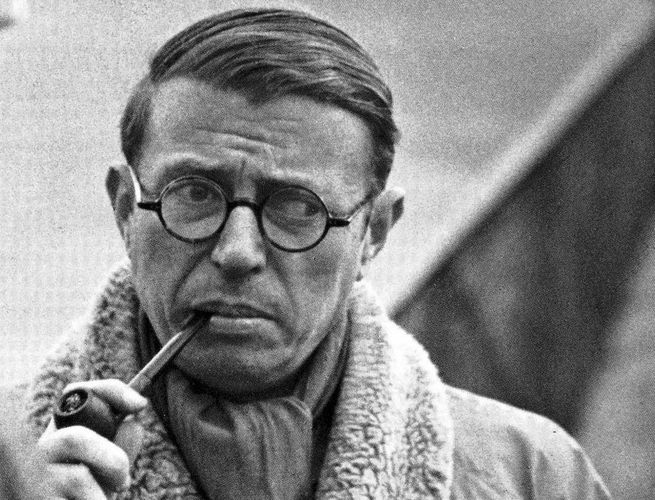
In response to Craig’s claim that Sartre is inconsistent, Sartre actually thinks his atheistic existentialism is more consistent than 18th and 19th century philosophy because it “states that if God does not exist, there is at least one being in whom existence precedes essence. . . . That being is man, or as Heidegger put it, the human reality” (Sartre 22). Sartre’s atheistic existentialism is founded upon the fact that God does not exist and that only we can provide meaning and morality for ourselves. If God does not exist, then Sartre’s philosophy is more consistent than any theistic philosophy. However, this does not mean that Sartre takes God’s death casually; he and his fellow atheist existentialists “find it extremely disturbing that God no longer exists, for along with his disappearance goes the possibility of finding values in an intelligible heaven” (Sartre 28). In other words, Sartre understands very well Craig’s hesitation and discontent at the notion that God and the transcendent realm of values, meaning, and purpose has evanesced. He seems to believe his philosophy is more consistent than previous thinkers because he admits from the start that God does not exist, whereas prior thinkers persistently tried to access God even though unbeknownst to them he never existed, i.e. philosophers like Kant did not realize God did not exist, which is an insight that Sartre deals with from the beginning. Atheistic existentialism simply admits that the project has always been one without divine assistance. Whether one is religious or not, one has to live in this world and admit that in our daily lives it is we who decide what is of value. It is not that God has suddenly ceased to exist; rather, he has never existed, so when philosophers throughout history have discussed morality they have always been left to their own means. The atheistic existentialist is more consistent than the others because it is a philosophy meant to honestly deal with this fact, i.e. the transcendent is inaccessible and always has been, and therefore theists have been living inconsistently, not the atheists.
But do not mistake Sartre as compromising his atheist position when he says God’s nonexistence is troubling. The fact remains for him that God does not exist. Where Craig decries the situation as horrible, so that divine command theory and God are still extant, Sartre realizes that “[w]e are left alone and without excuse” (Sartre 29). We cannot appeal to a higher realm and there is no use in pretending that we can, for to do so would only be self-delusion. Instead, we are condemned to be free and to create ourselves in the void left by the non-existent transcendent world:
Man makes himself; he does not come into the world fully made, he makes himself by choosing his own morality, and his options are such that he has no option other than to choose a morality. We can define man only in relation to his commitments. (Sartre 46)
Since we are born as predominantly tabula rasae, excluding genetics and instincts, we must create ourselves – this is our human condition and we have no other options. The consequence of choice is that we are always responsible for those choices.
Sartre’s atheistic existentialism requires that we act in good faith, which means that in our decisions we accept “freedom as the foundation of all values” (Sartre 48). With each decision we make we are obliged to embrace freedom. If we do not make decisions because we think life is determined then we are acting in bad faith. Craig and Kierkegaard may criticize this as a moment where Sartre is merely making a leap of faith into the transcendent, whether he admits it or not. I think Sartre would agree only that he is proposing a mode of being-in-the-world, which we are trapped within precisely because there is no God: the realm of freedom. He writes that “the ultimate significance of the actions of men of good faith is the quest of freedom itself” (Sartre 48). Sartre’s mode of being-in-the-world is a commitment to freedom in which we acknowledge that in the absence of the divine we must create ourselves, and that by “choosing myself, I choose man” (Sartre 25). Each choice one makes is implicitly a universal claim for humankind, because when I deliberate and decide that an action is good for me, I assume that for others in my situation the decision is also good. I am responsible for this decision because as I create myself I am implicitly saying to others that my decisions are the right decisions. I am culpable if my decisions are poor because of this. To understand this and to commit oneself to humanity’s freedom, to act in accordance with these existential principles, is to act in good faith. The word ‘faith’ for the atheistic existentialist is separated from its usual connotative elements, such as the divine and the transcendent.
Here it would seem that Craig could be criticized as not living in good faith because he is unwilling to fully consider whether his acceptance of Schaeffer’s two-story reality is erroneous. Regardless, now that we understand Sartre’s general philosophy, Craig does seem to have a point that Sartre’s system seems to break down when two separate individuals choose opposing futures for themselves, and thus humanity. I think Sartre would say such inconsistency would only arise from persons whose participation is in bad faith; for those who accept the human condition of freedom and responsibility in creating themselves would sort out their differences. Freedom is the foundation of all values for Sartre, but not in the sense that one can will whatever one wants. Instead, he means that we are bound to choose freedom and that in doing so “a strictly consistent attitude alone demonstrates good faith” (Sartre 48). Sartre would definitely say to Craig that those who create different values than a person of good faith are those who do not make freedom their decisions’ foundation. As a result, such a disagreement occurs precisely when one person acts in bad faith. Freedom becomes an objective foundation for Sartre’s morality.
I think Sartre sagaciously wrote the final words of Existentialism is a Humanism, as if he had a premonition of Craig’s critique:
… [W]hat man needs is to rediscover himself and to comprehend that nothing can save him from himself, not even valid proof of the existence of God. In this sense, existentialism is optimistic. It is a doctrine of action, and it is only in bad faith – in confusing their own despair with ours – that Christians are able to assert that we are “without hope.” (Sartre 53-54)
The despair Craig poignantly asserts rules our realm in the absence of God, the meaninglessness, the immorality of the chaotic world, is not the world of the atheist. Sartre demands that humankind grow up, become responsible, and live in good faith, much the same as Russell when he hopes one day we will put our dogmatism and fear behind us and “at last we shall have won our freedom” (“What I Believe” 87). Sartre and Russell may jointly attack Craig and Kierkegaard as immature for not accepting the world as it is. God will never speak to us, and likely never did speak with us, and so even if somehow divine command theory is true it is inconsequential for our moral purposes here on earth. What Craig considers purposelessness and absurdity in our world, what Kierkegaard values as inferior to the religious sphere of existence, is the freedom which Sartre and Russell assert is integral to our human existence. Therefore, we can see them criticizing Kierkegaard and Craig as being the philosophers truly inconsistent.
NEW ATHEISM
I like to think of the New Atheists as a group of politically motivated individuals of strong empirical inspiration who have, as of the start of the 21st century, made claims regarding the ineffectiveness and immorality of religion. On the matter of morality they provide several sides to a similar story: that God and the divine do not exist, and that we have a duty to a scientific, non-theistic morality. However, I do not agree with their answer to the moral question because it focuses on science and discounts the role of other types of reason, such as rational discourse, which I think limits the New Atheists’ moral adaptability. I will evaluate the New Atheist arguments here in order to critique them in the next section. Sam Harris (1967-), Richard Dawkins (1941-), and Christopher Hitchens (1949-2011) each agree with one another that all religions are equally problematic. They have been criticized for focusing too much on Islam as evil, but Dawkins says that he dislikes all religions because they are all wrong, while Hitchens thinks all religions have the potential for evil because of the “surrender of the mind” that belief in a divine being entails (Secular Talk). This surrender of the mind, as Hitchens puts it, is reminiscent of Russell’s criticisms of religion cowing people into fear. The New Atheists all aim to show how religion shackles the mind.
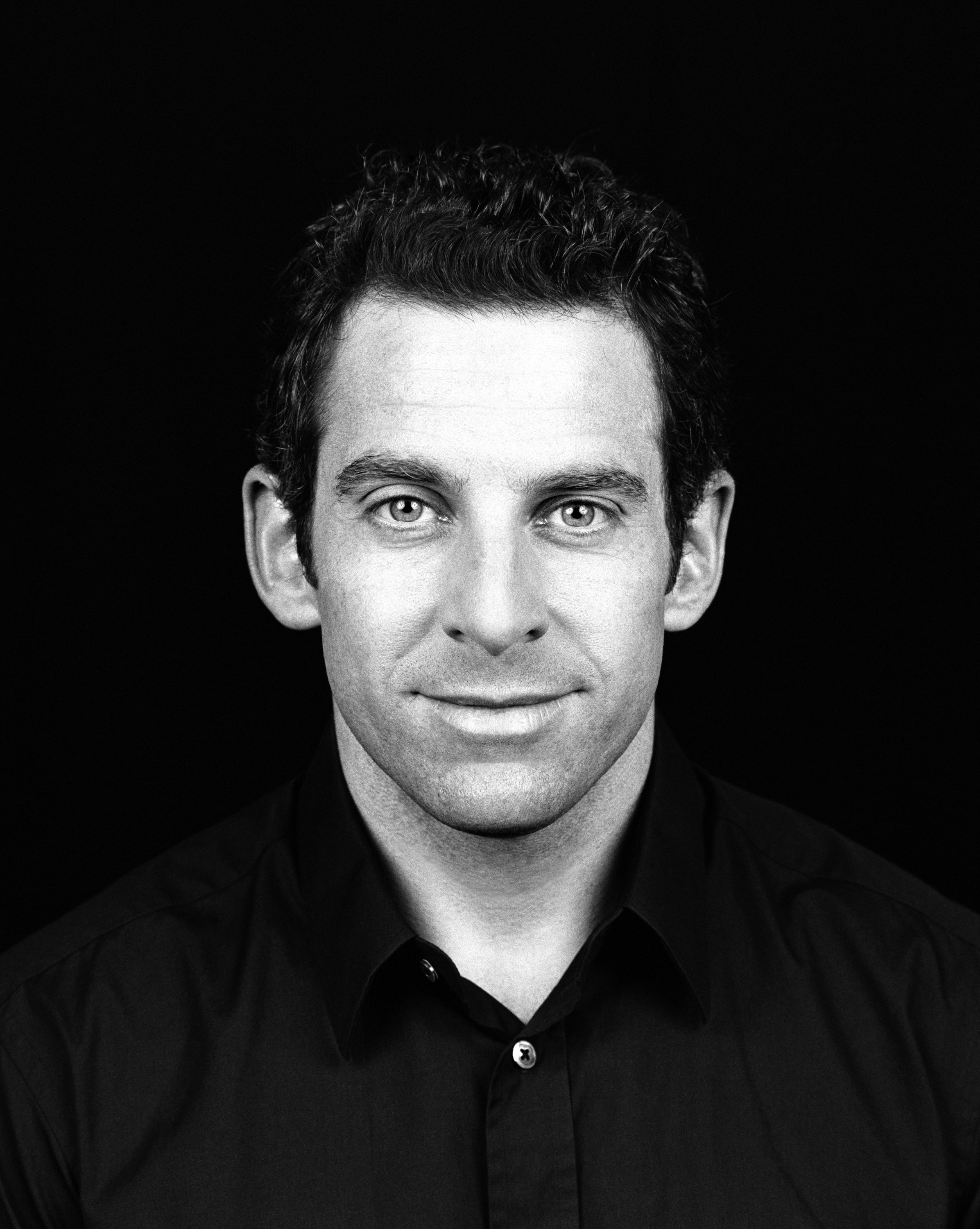
Harris argues that the “pervasive idea that religion is somehow the source of our deepest ethical intuitions is absurd” (The End of Faith 171). In other words, the notion that religion provides us our morality is a toxic concept that makes us subject to the whims of a fictitious deity. Now, one may protest that contemporary theology can demonstrate new, refined ways to obey God without taking religious texts to be simply divine commands. However, Harris is very clear on what he thinks of theologians: “[T]heology is now little more than a branch of human ignorance. Indeed, it is ignorance with wings” (The End of Faith 173). After writing The End of Faith in 2004, Harris went on to study and receive a PhD in neuroscience at UCLA, which led to his book The Moral Landscape. In this book he provides one of the most advanced and thought-out New Atheist arguments for the usefulness of science in morality, how science can help us identify moral values without the need of the divine. Harris’s thesis is simple: “[H]uman well-being entirely depends on events in the world and on states of the human brain. Consequently, there must be scientific truths to be known about it” (The Moral Landscape 2). He thinks that since our understanding of the physical universe is developing, “science should increasingly enable us to answer specific moral questions” (The Moral Landscape 28). This is possible if we consider that happiness is a brain state; by studying the brain we can better understand what it means to be happy. But even more fundamental than this, science can help us to know which decision is right and which is wrong given a specific circumstance. For example, say we need to decide which endeavor as a society we should invest in: eliminating malaria or cancer. This is obviously not an investment to take lightly, and Harris thinks science can allow us to understand which is more important to eliminate by studying which would have a greater impact on humanity.
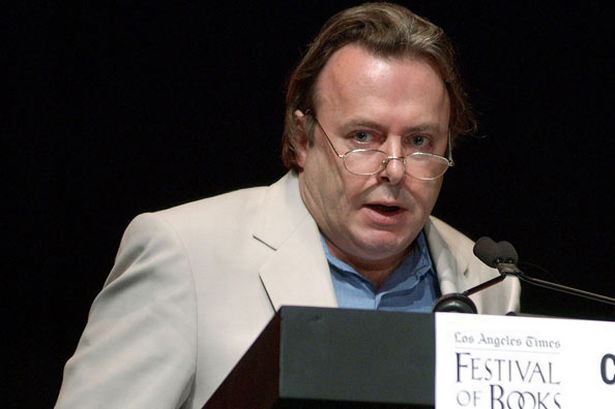
Hitchens and Dawkins both attack religion more than they discuss the role of science in morality. For instance, in Dawkins’ The God Delusion he does not formulate a new philosophical foundation for morality in the absence of God; rather, he focuses on burying religion in its own morass. Dawkins fairly points out that religion often claims the moral significance of its God or gods over all others, and the reason why is because a holy book says so. Take Christianity as an example: The Bible is often claimed to be the word of God. Dawkins thinks such a statement is simply false because he does not think God exists. He also thinks it is obvious that humans, not God, wrote the Bible, and so the Bible is better understood as a historical relic than a moral beacon. If the Bible is the key to morality, as divine command theory may suggest, then we have either the option of taking the Bible (a) literally or (b) figuratively. He criticizes reading it literally because obviously some of the acts condoned in the Bible are immoral, such as owning slaves. Nevertheless, many conservative Christians choose to read the Bible literally as the word of God. He acknowledges that “irritated theologians will protest that we don’t take the book of Genesis literally anymore. But that is my whole point! We pick and choose which bits of scripture to believe, which bits to write off as symbols or allegories” (Dawkins 269). If we take the Bible figuratively then we lose the objectivity that refined theists, like Craig, claim religion and God alone can provide. As Dawkins also says, Christians who take the Bible literally would be worthy of a good laugh, but only if it were “less typical of those who today hold power and influence in the United States” (Dawkins 271). Many of us can easily recall when Michelle Bachmann claimed Hurricane Irene was punishment for America’s moral decay; it is no longer funny when a powerful elected official interprets the Bible literally.
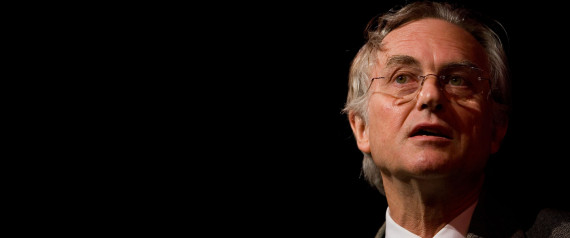
The Bible is filled with morally abhorrent actions, Dawkins says. One such case Dawkins powerfully asserts is the story of Sodom and Gomorrah, wherein Lot nobly gives his two virgin daughters to a crowd to have intercourse with in order to protect angels during the fall of Sodom. These daughters only return later to get Lot drunk and copulate with him (Dawkins 272; New International Version, Genesis 19.7-8, 31-36). Dawkins argues that if the Bible is to be taken literally then women must not be worth much. Lot treats his daughters terribly by sacrificing their virginity to a mob to protect angels, who do not need Lot’s help in the first place. If we take this passage as the literal word of God then it seems very likely that God is telling us women are lesser than men. Dawkins thinks the story of Lot is immoral because it condones misogyny. Lot’s wife even breaks a divine command by peeking back at the destruction of Sodom and thus is turned into a pillar of salt: “But Lot’s wife turned back, and she became a pillar of salt” (New International Version, Genesis 19.26). The message of Lot’s wife would seem to be that a woman ought to show obedience to God and her husband and female curiosity is treacherous. Dawkins thinks that this is a rash response of an almighty God to so light an offense, which gives credibility to misguided notions that women are inferior to men.
Hitchens agrees wholeheartedly with Dawkins. It is interesting to note, though, that Hitchens focuses on the story of Abraham, the same story which Kierkegaard upholds as the best example of his religious sphere of being-in-the-world. Hitchens criticizes Kierkegaard on this religious sphere and the notion of a leap of faith: “As [Kierkegaard] himself pointed out, it is not a ‘leap’ that can be made once and for all. It is a leap that has to go on and on being performed, in spite of mounting evidence to the contrary” (God Is Not Great 71). He argues that this is too much for the mind to handle. Each leap of faith detracts from one’s rational self until what is left is incomprehensible, a husk of a human mind.
On Abraham, Hitchens writes:
Perhaps afflicted by a poor conscience, but at any rate believing himself commanded by god, Abraham agreed to murder his son. He prepared the kindling, laid the tied-up boy upon it (thus showing that he knew the procedure), and took up the knife in order to kill the child like an animal. At the last available moment his hand was stayed, not by (sic) god as it happens, but by an angel, and he was praised from the clouds for showing his sturdy willingness to murder an innocent in expiation of his own crimes. As a reward for his fealty, he was promised a long and large posterity. (God Is Not Great 207)
Kierkegaard finds Abraham’s devotion to be a supreme good, but Hitchens shows us that the idea of praising an almost-child killer is morally abhorrent. To think that Abraham is praised by Christians, Jews, and Muslims is only fitting when you think of all the violence committed in the name of reclaiming holy sites, such as where Abraham is buried. The philosophical point is that if God can command such terrible things – for surely we would not abide and much less call moral a father sacrificing his son – then morally abhorrent actions can be committed in God’s name and be ‘moral.’ We see this even today, whether it is ISIS or Al Shabaab, the constant atrocities in the Israeli-Palestinian conflict, or even the rejection of modern medicine by Christian fundamentalists here in the United States. The War on Terror’s military operations were even originally called “Operation Infinite Justice” by the United States, but was soon changed in order not to offend Muslims who believe “such finality is something considered only provided by God” (“Infinite Justice, out – Enduring Freedom, in”). If divine command theory is correct, it is hard to stop much of the terrible religious violence in this world because it would seem many these acts are warranted by God. The leap of faith, for the New Atheists, is the rejection of reason for a more solipsistic story of humanity where we are special in the eyes of God. It is, as Harris says, ignorance with wings, a special ignorance with impunity from reason. But for Hitchens and Dawkins it remains impossible to take holy texts seriously and be moral since terrible actions are praised repeatedly. Craig and Kierkegaard call Abraham and Lot moral, but the New Atheists call them the very essence of what is wrong with this world.
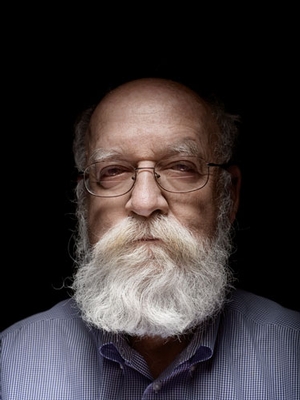
Harris, Hitchens, and Dawkins are the fieriest of the four principal New Atheists. Daniel Dennett (1942-) is often more temperate. His main goal in Breaking the Spell is to show that religion is an institution that has evolved as humanity has evolved. To do this he discusses how basic shamanistic practices became increasingly important in societies in order to cope with life’s tribulations. Eventually these primitive religions became more sophisticated to accommodate the new difficulties in life. As humanity settled into civilizations, its needs also changed. Sophisticated religion protected its civilization and condemned others, which proved pivotal in wars throughout history. One tool religion provided was divine inspiration. Dennett thinks an army who believes God is by their side will always be more zealous, and thereby more effective, in war than the nonreligious. Most importantly, sophisticated religion aimed to provide meaning in peoples’ lives; thus contemporary religious individuals often cannot understand how someone can live life meaningfully without God. Over time divine laws against apostasy became part of religions to retain their congregations as other religions became better known, and the proselytization practices emphasized by certain religions is a relic of this competition for believers. Morality in religion has evolved along the same lines. This is why there are moral edicts in the Bible, for example, that we may find outmoded for today’s society.
On the notion of eternal reward and damnation, Dennett notes that this ethics endorses an “infantile concept of God in the first place, pandering to immaturity instead of encouraging genuine moral commitment” (Dennett 280). The reason eternal rewards and punishments entail an infantile God is because they mean all morality is supposed to be in exchange for some later benefit; rather than doing something because it is objectively moral, one does it for ultimately selfish reasons – to go to heaven. However, Dennett does not argue that all religious people think this way. Whereas the other New Atheists condemn religion outright, Dennett is willing to talk about religious individuals who already admit that the God extolled by their religion is often solipsistic: “Many religious thinkers agree: a doctrine that trades in a person’s good intentions for the prudent desires of a rational maximizer shopping around for eternal bliss may win a few cheap victories . . . but at the cost of debasing their larger campaign for goodness” (Dennett 281). If morality is to be objective and meaningful, it cannot be an exchange for eternal rewards. Acts must be good intentioned rather than a self-centered acquisition.
Though Dennett does give more credit to thoughtful religious persons than, say, Dawkins, he still finds religion repugnant in the moral arena. He argues that often people simply say religion is an illusion, but one that must be maintained because it is innocent and helps people find meaning in their lives. One often-heard retort to New Atheists is, ‘What does it matter if I or others believe in God? It doesn’t hurt you if I find purpose and community this way.’ This is all well and good, but Dennett finds this notion of religion naïve:
In the adult world of religion, people are dying and killing, with the moderates cowed into silence by the intransigence of the radicals in their own faiths, and many afraid to acknowledge what they actually believe for fear of breaking Granny’s heart, or offending their neighbors to the point of getting run out of town, or worse. (Dennett 291)
Indeed, it is sad that religion claims such hold over morality that many are persecuted for their apostasy. We may try to fend off criticisms of religion by defending its innocent role in several lives,
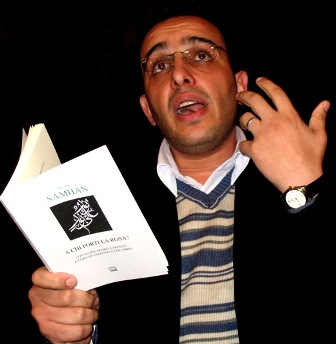
but what can moderate Muslims say to defend an apostate against adherents of sharia law? For example, in 2009 the Jordanian poet Islam Samhan was sentenced to one year in prison and fined $14,000 when a poem of his was accused of apostasy (“Jordanian poet prepares for jail”). It may be worthy of note that Jordan is considered one of the most progressive Muslim countries, yet apostasy is still a punishable crime there. We must ask ourselves if this is just. If a moderate Muslim quotes one passage from the Quran about treating others with grace, a fundamentalist can always respond with another quote from the Quran, or maybe even the Hadith, that the infidel and apostate ought to be killed by Allah’s will. The same can be said of almost every religion. A Christian can quote from the Bible that homosexuality is a terrible sin, but one can also quote that all should be treated as you yourself would like to be treated. Religion and its morality is simply a paradox, the New Atheists claim. Dennett’s point is that if religion is really the best we can do for morality and meaning, then humanity is doomed. Morality must be founded elsewhere.
The New Atheists as a whole work to dismantle the idea that religion holds the only key to morality. Harris argues that science can be very informative to our moral lives and can even be used to discover moral facts. Dawkins and Hitchens disparage theists over the interpretations of holy texts. In particular, Dawkins thinks religion is caught in a paradox because we cannot read holy texts literally since that would clearly condone terrible actions, such as genocide and misogyny, but if we interpret these texts symbolically then theists have lost the objective morality they wish to keep in the first place. As for Dennett, he thinks that religion is an institution that has evolved to suit the needs of humanity, but it has become a vehicle for ignorance and violence in contemporary society. There is something wrong with religion, the New Atheist declares, when a Christian can quote from the Bible to excuse homophobia or when a Muslim can quote from the Quran to murder one who defames Muhammed.
CRITIQUE OF NEW ATHEISM
New Atheism has been a powerful face for secular humanism over the past decade. However, I think it is time for atheists to admit that particularly Hitchens and Dawkins do not provide a firm philosophical underpinning to replace the divine command model for meaning and morality proposed by Kierkegaard and Craig. As Dawkins says, either we must read holy texts literally (for objectivity) or we must interpret them (which makes absolute objectivity impossible). This is essentially the Euthyphro Dilemma employed by Russell we saw earlier in that either the Bible (God’s word) is moral or points out where the moral is. If the Bible itself is moral then one should read it literally. If the Bible points toward the moral then one should read it symbolically, in which case morality is external to God’s word and can be achieved by other means than faith. This dilemma is the constant trap for theists every time they claim objective morality cannot exist without God. Dawkins and Hitchens do, I believe, show how it would be ridiculous to read the Bible or any holy text as the literal word of a divinity since this leads to atrocities all around the world, but they do not provide an alternative for morality beyond pulling oneself up by one’s bootstraps to mature into intellectual prosperity. Dawkins and Harris particularly emphasize that science is the only tool we have to be moral. I think they are wrong to think leaving religion is an intuitive and easy transition and that only science can replace religious morality.
Harris is more explicit about science’s role in the moral conversation, but he also fails to provide a persuasive morality. He does not focus on biology in the way that Dawkins and Dennett do, but he does put forth a model of morality derived solely upon scientific facts. What results is a version of utilitarianism that embraces that morality means just what allows us to achieve the brain state of happiness. I think Harris’s insight is important to include in a moral theory, but he pushes the usefulness of science so far that his morality becomes questionable at times. For instance: What if all of humanity could be happy, but to do so a child would have to be tortured eternally in some city basement? Harris would have to condone the torture because he would find it necessary to promote widespread brain states of happiness. I think in several ways this makes him just as immoral as the religious doctrines he so fervently criticizes. Harris can be criticized as a brain science utilitarian: morality for him is the goal to maximize happy brain states in the most amount of people. What results is a morality that disregards “the complexities of utilitarianism that philosophers have struggled with for around two centuries,” such as the moral quandary about the tortured child I posed above (Schulzke 69). Contemporary consequentialist thought has adapted to such moral dilemmas, such as some unique views of act consequentialism, which emphasizes one’s actions more than traditional utilitarianism. What this allows is that even if placing this child in the torture chambers would maximize happiness in the world, the act itself is still immoral; therefore, one should not torture this child even for all the happiness in the world. Harris does not account for such advancements in the consequentialist discussion of morality. As a result, his moral theory appears all the weaker by comparison.
All of the New Atheists believe science to be the ultimate and best source of human knowledge. I agree with them that science is an incredible method to discover our universe. However, for them all other sorts of knowledge are not to be trusted. Dawkins and Dennett trust in evolution and intuition to explain morality. For example, they think it is obvious not to murder another human being; this also is bound up in how evolution has programmed us over time to best survive as a community. This does not seem apparent to me because there are murders committed every day. For the New Atheists morality always goes back to science. I think we ought to condemn murders as wrong, not just because it is evolutionarily disadvantageous but because it is wrong to end another person’s life. But morality cannot come from any unscientific source for the New Atheists. As Marcus Schulzke writes, “By [Dawkins’] standards, one cannot arrive at moral precepts through the use of reason” (Schulzke 67). For the New Atheists science is reason. But this is an error in their concept of reason because it discounts the usefulness of philosophy in moral investigations. Science is a tool in reason’s toolbox, but there are more tools in the box, such as doubt, modal logic, mental categorizations, etc. The equivocation of science and reason is a problem because morality for Dawkins and Dennett ends up merely descriptive and not normative. Science is by definition a process of hypothesis, observation, and then interpretation of the observations to either prove or disprove the hypothesis. Science is primarily observational and descriptive. To make a claim about what one ought to do is itself a non-scientific and philosophical claim. Thus, Craig’s criticism that God is necessary to have an objective, normative morality seems to be a strong argument against the New Atheists’ who depend too much upon science, which constrains their ability to formulate a meaningful theory of morality.
TEMPORAL RATIONALITY
I am sympathetic to New Atheism, but given the critique above I think atheists need to provide a better foundation for morality without God. It is time to provide a morality that is worthy of following the tradition of Bertrand Russell and Jean-Paul Sartre. New Atheism has not provided such, but I will try to fill this void by arguing for two principles that can allow normative morality without God.
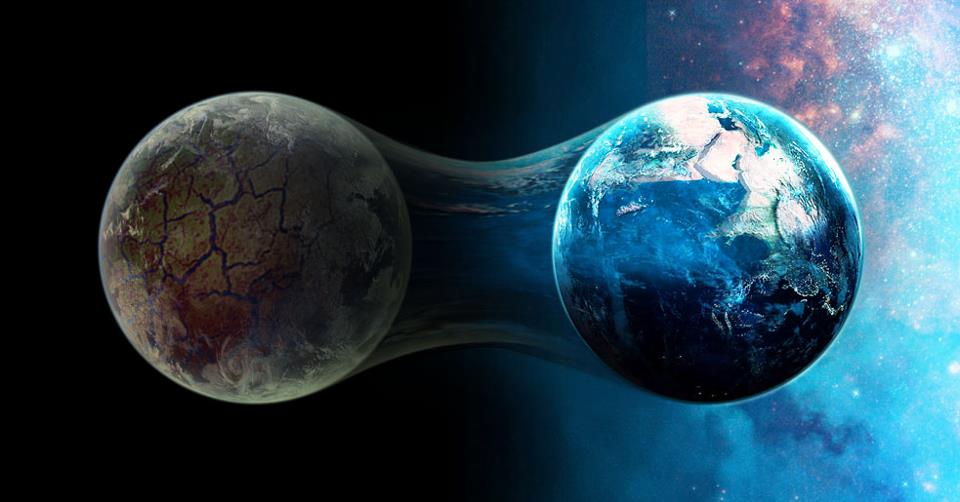
A core concept in the atheist critique of theism is the fixedness with which morality is treated in religion. The same objectivity that Craig is so concerned with is also the most toxic element of religious morality. The two-story moral metaphysics presupposes an eternal morality to which God’s command is avowed. This is a grand notion with the power to overwhelm a mind and place it in awe – it is sublime – but it also means that morality is static; it is timeless or merely atemporal. This is the definition of enslavement to dogma, for if a moral claim is made for all time it is likely at one point in time to become immoral, given the vastness of time we can conceive of. This happens because we cannot know all the possible conditions of the future. Some things may never really change, but the point is that we cannot know for certain; we must keep ourselves open to revision lest we accidentally and without our knowing enforce a claim that eventually becomes immoral. In five hundred years humanity will exist in a state unknown to us now and our moral judgments may become immoral. It is probable that even our notion of humanity itself will evolve as we progress (or regress). For example, we may wish to avidly avoid global warming in our current situation. One could say to ‘Go Green’ is a sort of moral imperative in the 21st century. But it is reasonable to assume that in the future an event could occur, on a planetary level, which results in a drastic cooling of the earth. This is all to say that it is foreseeable that perhaps one day heating up the earth’s atmosphere with greenhouse gases may be moral.

We must create a model of morality that can accommodate such events in the future rather than remain eternally fixed as a moral maxim; it must in principle allow for moral adaptations as we change, as our world changes, and as the future unfolds. Certainly, we would not want the moral claims of generations past to infringe upon ours today. It is therefore quite reasonable to assume the same for the generations to come. However, religions often serve to preserve moral claims past their due. When they do this, they prevent the intellectual maturity Immanuel Kant argues for in “What is Enlightenment?” When religions foster outdated moral claims, this is what Kant critiques my epigraph: “. . . religious immaturity is the most pernicious and dishonourable variety of all” (“What is Enlightenment?” 59). Religion holds the reins on too many peoples’ lives to maintain immutable morals, making religious immaturity one of worst kinds.

Morality itself must obey what I will call the temporal aspect: morality does not gain its normativity by its immutability or eternality, but rather from its ability to adapt over time, to provide direction as future issues and conditions arise.
Observationally, we know that moral values have evolved over time, as Dennett and Dawkins are fond of recounting. The idea of morality as a progressive mode of being-in-the-world is ipso facto a requirement of morality, I think. An eternal morality is an oxymoron in my conception, because morality that is purely static is not capable of acclimating to future moral quandaries. Fixed morality is thus dogma, the heart of immorality for Russell, the New Atheists, and even Kant, who once wrote that “[o]ne age cannot enter into an alliance on oath to put the next age in a position where it could be impossible for it to extend and correct its knowledge, particularly on such important matters” (“What is Enlightenment?” 57). It is wrong for one generation to commit itself to a strict notion of morality because it forces the subsequent generations into intellectual slavery to that notion. Especially for a matter as important as morality, each generation should be afforded the opportunity to modify the old morality to be more suitable to the age in which it must currently operate.
However, there are two modes of explaining the temporal aspect. Craig believes that moral progress must entail an objective moral standard, and that that standard is God’s divine edict, otherwise there is only moral change but never moral improvement or decay. The second version is of an evolution of morality excluding divine command and instead based on a one-story model of existence. The first version is a priori a standpoint of a religious worldview, whereas the second version can be called a one-reality perspective. Whether one believes Craig’s or the one-reality version, one must concede that morality indeed must operate under the temporal aspect, for a morality that cannot adapt to the future is at best an indifferent morality.
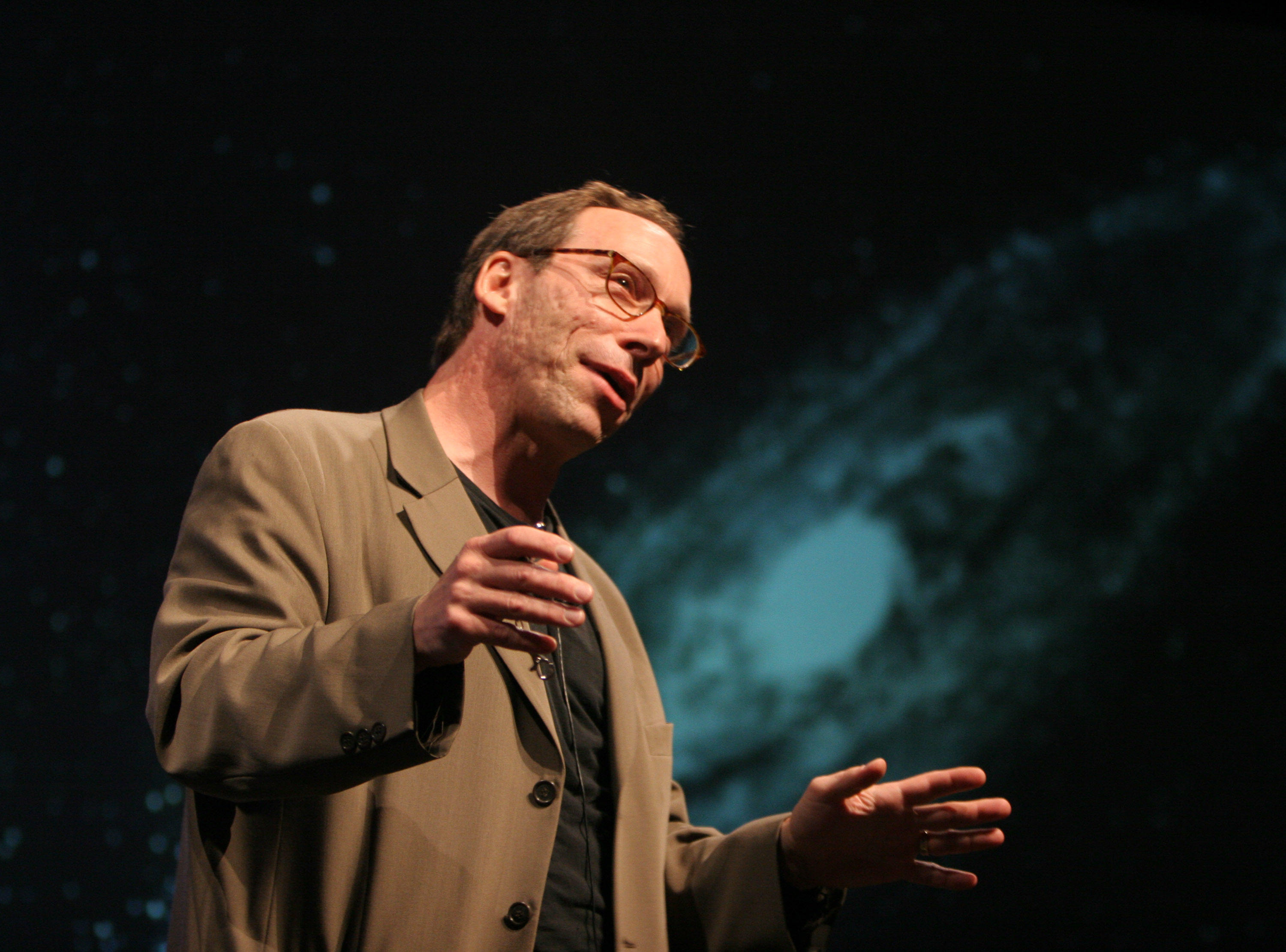
I think atheists are correct in asserting that the one-reality worldview is correct. Nevertheless, there is an error in the logic of particularly the New Atheists because they assert that a one-reality approach to the world means that only science is a true means of knowledge, and therefore scientific naturalism is the best we can provide for morality. For example, science is accepted as the means with which to understand the physical world, which is how the New Atheists interpret this one-reality perspective. Therefore, in physical concerns we should defer to scientific inquiry. However, Harris overemphasizes science’s role in morality, as does Dawkins, Dennett, and the atheist physicist Lawrence Krauss. This is a mistake caused by conflating science and reason. Let me make it clear: Science is a branch of study that operates by the use of reason, but reason is not restricted to scientific restraints. Science is contingent upon reason, but not vice versa. Of course, science as a tool of reason does have its uses in the realm of morality, in better knowing the consequences of our decisions. But to restrict all reason to empirical restraints means that several of the ideas in the study of moral philosophy must be tossed away. Surely the moral philosophies of Plato and Aristotle, Kant and Mill, are not be thrown away just because they are not strictly scientific. The realm of ideas is part of rationality that can exist within a one-reality conception of the world.

It is imperative, I think, that a moral theory properly account for reason so that such a theory can continue to be developed. If a moral theory cannot develop then it is only a descriptive notion of morality, and thus not normative. The way in which morality can fit within these parameters is by the rational principle: we must hold rational discourse about morality with one another in order to produce a moral code that is accepted by all involved and subject to continued revision as new rational participants enter the discussion. What I call rational or reasonable are assertions supported by valid logic and also affirmed by subjective experiences that, via logic, become applicable to others.
Reason is the root assumption in all thought. Even if human beings are not often as rational as the Enlightenment supposed, the abilities of humanity’s exercise of reason are still quite remarkable. Science is one example of the triumph of reason, but its success has led to a delusion that science is the only kind of reason. (Philosophers around the world shutter at the thought!) The rational principle requires that moral progress be an ongoing reasoned discussion – assertions supported by valid logic and affirmed by subjective experience – of what ought to be. This may sound perhaps too simple a notion, but it is the kernel of thought that has remained with us in social and political considerations. In Kant we find a notion of antagonism as a necessity in society to free ourselves from our self-incurred immaturity, as he is famous for saying (“Idea for a Universal History” 44; “What is Enlightenment?” 54). By arguing with one another in reasoned discourse we are forced into enlightenment. This is because to argue effectively is to support your assertions with reasons – with valid logic and examples from your experiences. If you do not discuss morality among others, then you might never be forced to use the rational principle. For example, I can imagine a person who was taught from birth to always be a good Hindu and is content with Hinduism’s teachings. However, if Dawkins were to walk up to this person one day and declare Hinduism false, this person must respond with reason to defend his or her religion. Antagonism can be useful in order to spur reasoned discourse, and by enacting the rational principle philosophical development ensues.
The rational principle is a principle that allows morality to satisfactorily deal with the temporal aspect, which we have established is necessarily a part of a normative moral theory. If we operate under faith alone, morality does not have the ability to adapt to the future. This inability to adapt is a likely reason why religions have perhaps inadvertently caused violence in the world, such as the Crusades or Spanish Inquisition, the Hindu and Muslim hatreds between India and Pakistan, or the current acts of violence committed by Sunnis against Shia, or vice versa. Religion has stayed past its due and causes damage because of its difficulty adapting. I believe this difficulty comes from attempting to balance faith and reason, where faith hinders the rational principle frequently. Faith allows one to put reason on hold, so to speak, by claiming some higher significance, some connection to the divine. This causes delays in the procedural account of morality I am advocating for. We can see times when faith has made it difficult for reason to operate in religion. For instance, the Catholic Church did not rescind their claim that the Jewish people as a whole were responsible for the deicide of Jesus until the 1960s under Pope Paul VI. This means that for approximately 1,960 years the Catholic Church permitted the charge of deicide, a popular excuse for the pogroms across Europe. This ‘forgiveness’ took place over fifteen years after the Holocaust, and one has to wonder how an institution that claims the reins of morality for currently over one billion people can be excused themselves for such a seemingly unpardonable errancy. Though the Vatican has dropped the claim, we still hear from a few Christians that Jews are Christ-killers. It is unsettling that Christianity has had such difficultly in advancing its morality to accommodate the future. But faith proves a hindrance to rational discussion because at every moment one may simply say that they need not provide reasons for their thoughts: their faith tells them. The rational principle breaks down when faith is introduced, and thus the temporal aspect cannot be effectively accommodated for in a model of religious morality. Faith is what enforces the idea of the immutability or eternality of morality because it introduces the idea that there are a priori morals that never change and are not learned via reason but by revelation. This inevitably leads to the fixedness of morals that is strictly opposed by the temporal aspect. And in the rare cases where the temporal aspect is achieved by religious morality it is precisely because religion has given in to the pressure and utilized not their faith, but their reason, to do so.
The idea that religion is the only means to progress our morality is common. People often quote how William Wilberforce or Martin Luther King, Jr. were highly religious but ethically progressive, as if this proves that morality is the domain of religion and the divine. This argument misses the point about moral progress. Secularists are placed in a curious dilemma of their own, but one perfectly possible to refute. Philip Kitcher remarks that
The source of the predicament in which secularists seem to be trapped is an inadequate conception of progress. Ethical progress is taken to consist in the discovery of some prior truth, and, in consequence, attempts to understand the historical episodes are driven by a quest for the moment at which the innovators apprehended the sources of the newly identified truth. But this is not the only possible perspective. Instead, progressive ethical change might consist in a collective construction of an amended ethical code. Out of conversation initiated by the pioneers comes something new, something shaped by demands and needs that were previously unsatisfied, even unacknowledged. (Kitcher 40-41)
With the rational principle and temporal aspect as guiding principles for moral conversations, we do not need appeals to the divine. What results from my theory is a type of discursive constructivism, in which we create together the morality that best allows for freedom and equality in our society. We do not find any a priori moral truths; rather, we construct morality as it ought to be according to our reason. Each age must not be bound by the prior moral constructions, but must evaluate themselves what ought and ought not to be done. If we concede to a priori values then I think we give up the freedom so important to Russell and Sartre. Especially in a pluralistic society such as ours in the United States, we must not allow perceived a priori claims of morality to cloud our theory of justice. A secular version of morality is the only necessary morality, because it binds us not by our religious obligations and dedications, but by our intrinsic value as rational beings. A secular morality is applicable to everyone in a way that God’s fiat in the Bible cannot be. This is the reason why separation between the church and the state is so integral to American government.

One may object that I have not directly answered the main question of this essay: Can a normative morality truly exist without a basis in the divine? Normativity in morality is just the claim that everyone in the specific situation A ought to every time perform action B. However, I believe that most systems of morality get trapped by their own dogmatism precisely because normativity is understood in too simple a manner. By ‘specific situation,’ we often set up context for moral decisions, yet we disregard or forget to include not just place but time. The temporal aspect merely reminds us that we must account for time in our moral theory; if we do not, we have not achieved a truly normative morality. The temporal aspect requires that each generation revises morality via reasoned discussion, but this morality is always restricted to its temporal constraints. What arises from this is an increasingly complex moral story of humankind. The rational principle asks of us only that we discuss amongst ourselves what ought to be and utilize our faculty for reason, which is developed to its finest point only in discussion and debate concerning the telos of our society and time, in order to achieve freedom from dogmatic morality. We can forge our moral values in this manner, but in doing so understand that future ages will also have the freedom to modify values to their unique time. The rational principle can account for the creation of morals in a specific situation and time; therefore, without use of the divine or the transcendent, I have demonstrated a model of normative morality. The foundation for this normative model is freedom. We are only subjected to reasoned discourse, from which all moral values are established, but in the hopes that greater freedom ensues. No generation is ever enslaved by the moral constructions of prior ages; we are free from dogmatism.
A criticism I can see opined against my argument is that I have created a paradox. My moral theory suggests that morality must adapt through time in order to avoid dogmatism; however, the very model of morality I have contended is static. Therefore, it is dogmatic and the system must be thrown out. I understand why such a criticism must be made, but I do not think it is as damning as it first appears. The very idea of a moral theory is fixed. That is a logical constraint within which all moral philosophy must operate. But the way in which an idea operates in philosophy is not the same as how it operates in day-to-day societal actions. If the goal of a moral theory is to produce as much freedom as possible it eventually runs up against its own cage. However, I think my moral theory is the most moral in that it maximizes freedom from tyranny and dogma in everyday life; we are allowed to question everything and reason our way to new conclusions about old problems without the worry of punitive action, for we are free. My moral theory itself is not free, but allows us a way of being-in-the-world that is most conducive to freedom. My moral theory is not ‘morality’ per se; it is a procedure by which I think we can collectively and discursively construct an adaptable morality. The procedure is fixed, but the morality that is produced is not. My moral framework is in this regard akin to Sartre’s atheistic existentialism, which is based on the objective value of freedom. We are constrained in thought by reason under my conception. This is why Kierkegaard’s religious sphere is so appealing: it allows one to break through the ethical – the reasonable – and be somehow freer. But there is a cost, mainly that reason loses its reasonableness. In my moral theory we are not restricted by a priori moral values, so there is no need for the radical leap of faith, as Kierkegaard advocated, in order to free oneself. One is always free, and in this way I think my version of atheistic morality reconciles the desires of Kierkegaard with the atheistic model of philosophy. Reason still has its reasonability and we are free from a priori moral facts.
This is all to say that I do not disparage theists for their belief. I understand the draw of Kierkegaard and the desire for concrete moral values provided by God. Nonetheless, I think that my mind is most free when it can roam not with God but rather with reason into the unknown. I acknowledge that God cannot speak with me, and, as Sartre says, even God’s existence becomes irrelevant in our lives at one point. The atheist cannot claim to provide eternal life as reward for good deeds; rather, she can persuade that in lieu of fear of death one can make a serious project of the unique life one has. The future of humanity must incorporate the temporal aspect via the rational principle, which I believe persuasively fulfills the normative parameters I set out for, in order to ensure prosperity and freedom for all of us.
[1] Kierkegaard will be critiqued predominantly in section NEW ATHEISM of this paper by Cristopher Hitchens. Section RUSSELL AND SARTRE will be in response to Craig’s arguments.
[2] Russell, in particular, thinks that Craig’s argument about the afterlife is more about the fear of death than meaning in life per se. Atheistic thinkers can respond to Craig’s argument by pointing out that something is true regardless of one’s personal feelings about it (e.g. I may not like my height, but that does not mean I can pretend to be taller). That is, immortality is not true because one’s emotions desire it to be true. It must be true independent of personal desires.
[3] In the next section I will investigate Craig’s criticisms of Russell and Sartre and see what they may have said in response.
WORKS CITED
Craig, William Lane. Reasonable Faith: Christian Truth and Apologetics. Wheaton, IL: Crossway Books, 1994. Print.
Dawkins, Richard. The God Delusion. New York: First Mariner Books, 2008. Print.
Dennett, Daniel C. Breaking the Spell: Religion as a Natural Phenomenon. New York: Penguin Group, 2006. Print.
Evans, C. Stephen. “Moral Arguments for the Existence of God.” The Stanford Encyclopedia of Philosophy, Summer 2014. Ed. Edward N. Zalta. Web. 26 February 2015.
Gert, Bernard. “The Definition of Morality.” The Stanford Encyclopedia of Philosophy, Fall 2012. Ed. Edward N. Zalta. Web. 25 February 2015.
Hare, John. “Religion and Morality.” The Stanford Encyclopedia of Philosophy, Winter 2014. Ed. Edward N. Zalta. Web. 25 February 2015.
Harris, Sam. The Moral Landscape: How Science Can Determine Human Values. New York: Simon & Schuster, 2010. Print.
———-. The End of Faith: Religion, Terror, and the Future of Reason. New York: W. W. Norton & Company, 2004. Print.
Hitchens, Christopher. God is Not Great: How Religion Poisons Everything. New York: Hachette Book Group, 2007. Print.
Hume, David. “Of Miracles.” Dialogues Concerning Natural Religion. Ed. Richard H. Popkin. Indianapolis: Hackett, 1998. 107-125. Print.
“Infinite Justice, out – Enduring Freedom, in.” BBC News. British Broadcasting Corporation, 25 September 2001. Web. 12 April 2015.
“Jordanian poet prepares for jail.” The National. Abu Dhabi Media, 2 September 2009. Web. 5 April 2015.
Kant, Immanuel. “An Answer to the Question: ‘What is Enlightenment?’” Political Writings. Trans. H. B. Nisbet. Ed. Hans Reiss. 2nd ed. New York: Cambridge UP, 1991. 54-60. Print.
———-. “Idea for a Universal History with a Cosmopolitan Purpose.” Political Writings. Trans. H. B. Nisbet. Ed. Hans Reiss. 2nd ed. New York: Cambridge UP, 1991. 41-53. Print.
———-. “On a Supposed Right to Lie Because of Philanthropic Concerns.” Grounding for the Metaphysics of Morals. Trans. James W. Ellington. 3rd ed. Indianapolis: Hackett, 1993. 63-67. Print.
Kierkegaard, Søren. Fear and Trembling: a Dialectical Lyric. Trans. Walter Lowrie. Princeton: Princeton UP, 1952. Print.
Kitcher, Philip. Life After Faith: The Case for Secular Humanism. New Haven: Yale UP, 2014. Print.
Lipka, Michael. “Americans are somewhat more open to the idea of an atheist president.” Pewresearch.org. Pew Research Center, 29 May 2014. Web. 23 March 2015.
Plato. “Euthyphro.” The Trial and Death of Socrates. Trans. G. M. A. Grube. Rev. John M. Cooper. 3rd ed. Indianapolis: Hackett, 2000. 1-19. Print.
Russell, Bertrand. The Problems of Philosophy. Indianapolis: Hackett, undated. Print.
———-.“Why I Am Not a Christian.” Why I Am Not a Christian and Other Essays on Religion and Related Subjects. New York: Simon & Schuster, 1957. 3-23. Print.
———-. “What I Believe.” Why I Am Not a Christian and Other Essays on Religion and Related Subjects. New York: Simon & Schuster, 1957. 48-87. Print.
Sartre, Jean-Paul. Existentialism is a Humanism. Trans. Carol Macomber. Ed. John Kulka. New Haven: Yale UP, 2007. Print.
Schulzke, Marcus. “New Atheism and Moral Theory.” Journal of Global Ethics 9.1 (2013): 65-75. Philosopher’s Index. Web. 9 February 2015.
Secular Talk. “Should Atheists Criticize All Religions Equally?” Online video clip. YouTube. YouTube, 31 December 2014. Web. 2 April 2015.
The Holy Bible. New International Version. Grand Rapids: Zondervan House, 1984. Print.
Westphal, Merold. “Søren Kierkegaard.” The Columbia History of Western Philosophy. Ed. Richard H. Popkin. New York: Columbia UP, 1999. 546-549. Print.
I want to thank Professor of Humanities Craig Greenman of Colby-Sawyer College for his guidance of this thesis paper. Without his suggestions and knowledge of philosophy — especially when it came to Kierkegaard and Sartre — I could never have completed this work.
I also want to thank Daniel Dennett who, despite his busy schedule, referred lead me to Philip Kitcher’s body of work, for which I’m very grateful.
Others who helped me include Professors Pat Robertson and Michael Jauchen, and my fellow philosophy student Duc Nguyen.

 AARON RECORDS